The same promise,
since 2016.
Plan Bee began in 2016 with a trip — and with a decision that never changed: only organic acids and thymol in the hives, never synthetics.
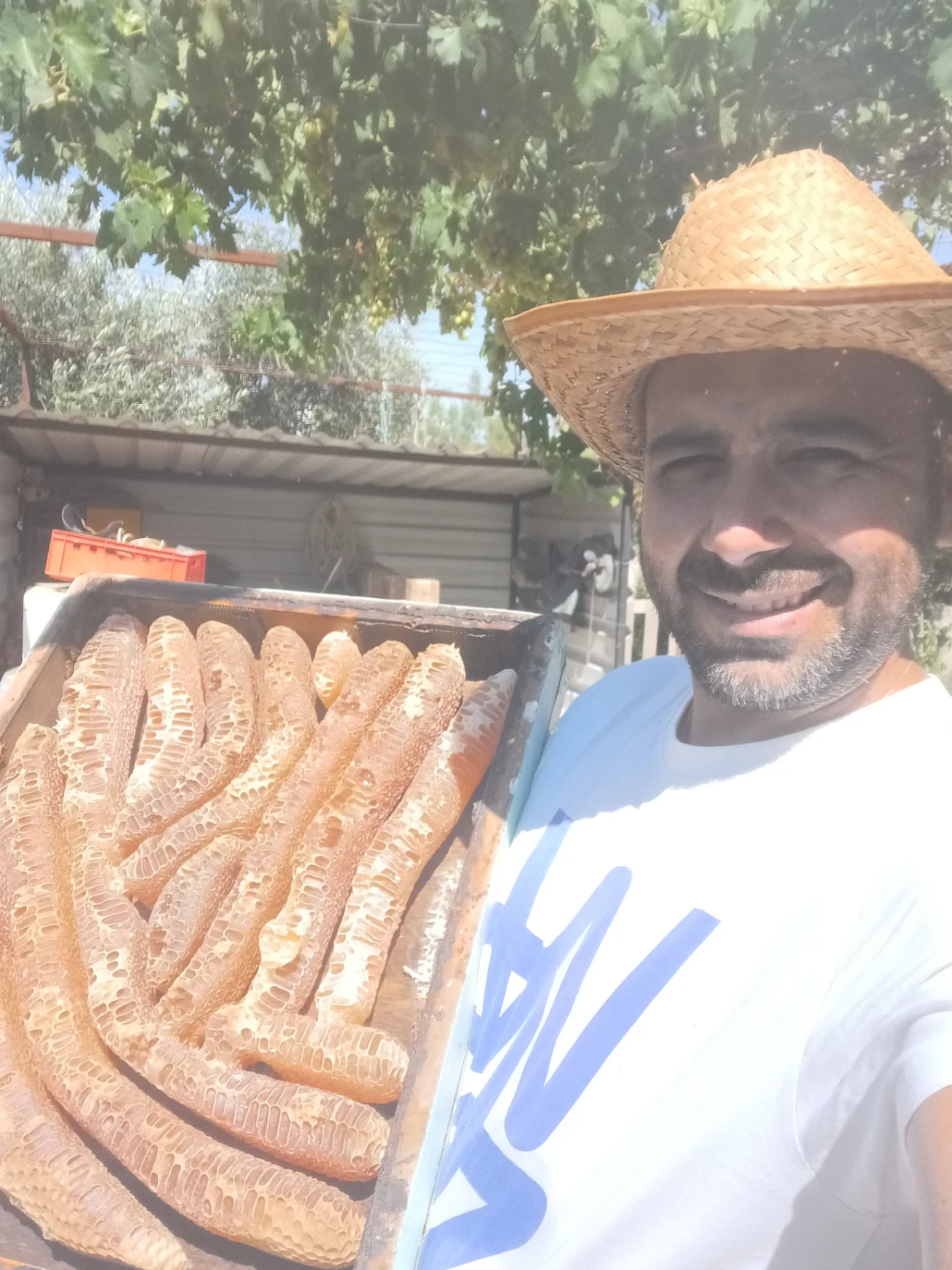
Beekeeping is our passion, not our profession — some years there is more honey, some years less, depending on what the blossoms give. Some years are poor. We don't try to fix that; we simply wait for the next one.
If one thing sets us apart, it is that you can check it: every jar leads, with one scan, to its batch's own page — with the production details and, wherever an analysis has been done, the results beside the EU limits.
The journey
A trip to Thessaloniki — and out of nowhere we found ourselves in the beekeeping courses of the Laboratory of Apiculture and Sericulture at the Aristotle University. The first contact with the world of the bee, the first stings, the first hands-on lessons — all of it magical, all of it defining. Somewhere in there, a new beekeeper was born.
The studying continued in Cyprus. And alongside it, practice with experienced, traditional beekeepers. All of it was shaped by a feeling for nature and the natural way of living, and it set the course for how we would keep bees: with respect for the bee, for nature and for people.
A beekeeper, at last. The first two hives up the mountain, from day one — and the rule that never changed: only organic acids and thymol, never synthetics. And the real journey begins.
The apiary grew year by year, from the first two hives. The world of the bee is boundless and the difficulties more numerous still; but through every adversity, the promise we made at the very start is still our beekeeping gospel.
Three years after the first two hives, the first real harvest: wild lavender and wild rosemary honey. The first analyses were done at the same laboratory in Thessaloniki where it all began.
Drought and poor flowering, and varroa on top: in the winter of 2024–2025 we lost about 40% of our colonies. We learned more that year than in all the good ones. We carried on with those that endured — nature itself did the selective breeding.
Every main batch gets a permanent page with its analyses, and every jar its QR.
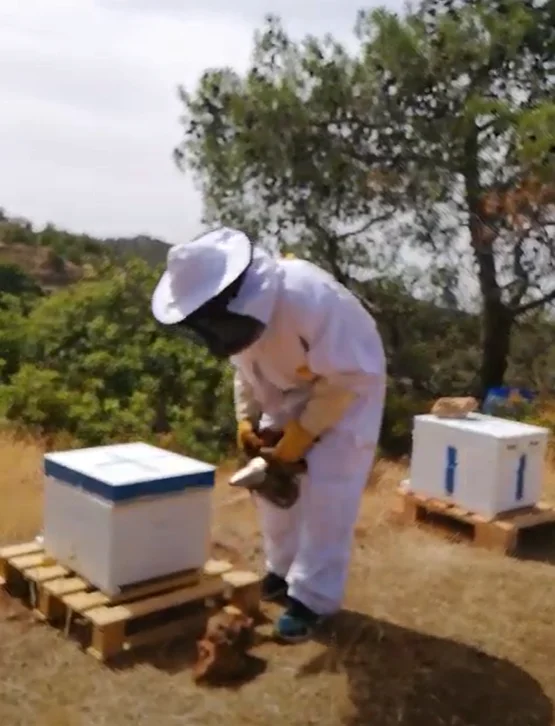
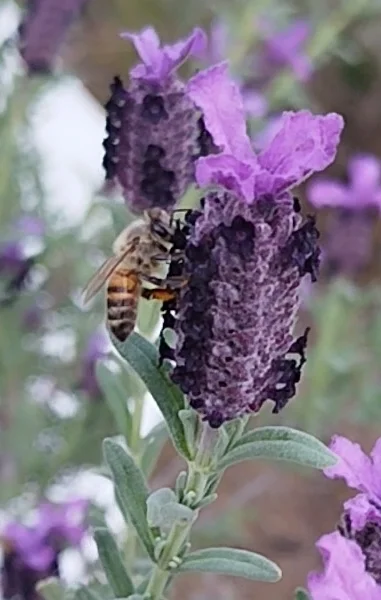
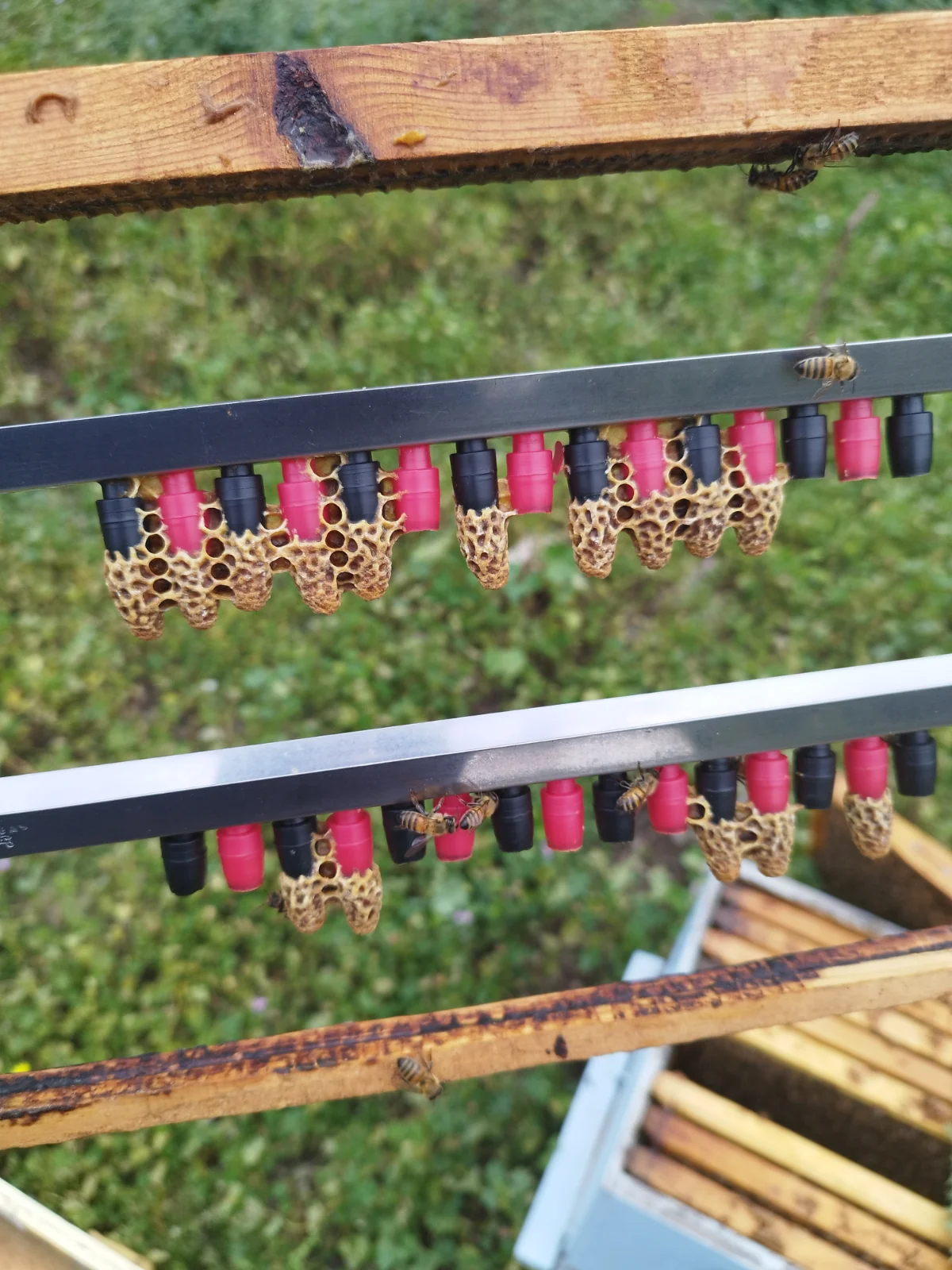
See how we work
Our eleven practices, written plainly.