2611
The first extraction of 2026. This page is the permanent record of this batch — its address is the LOT code on your label.
Identity
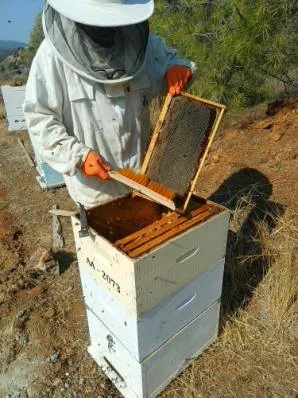
Only capped, mature honey is harvested; extraction without heat, straining only — as with every batch.
Origin
We publish only the area and the altitude — never exact apiary locations.
This harvest
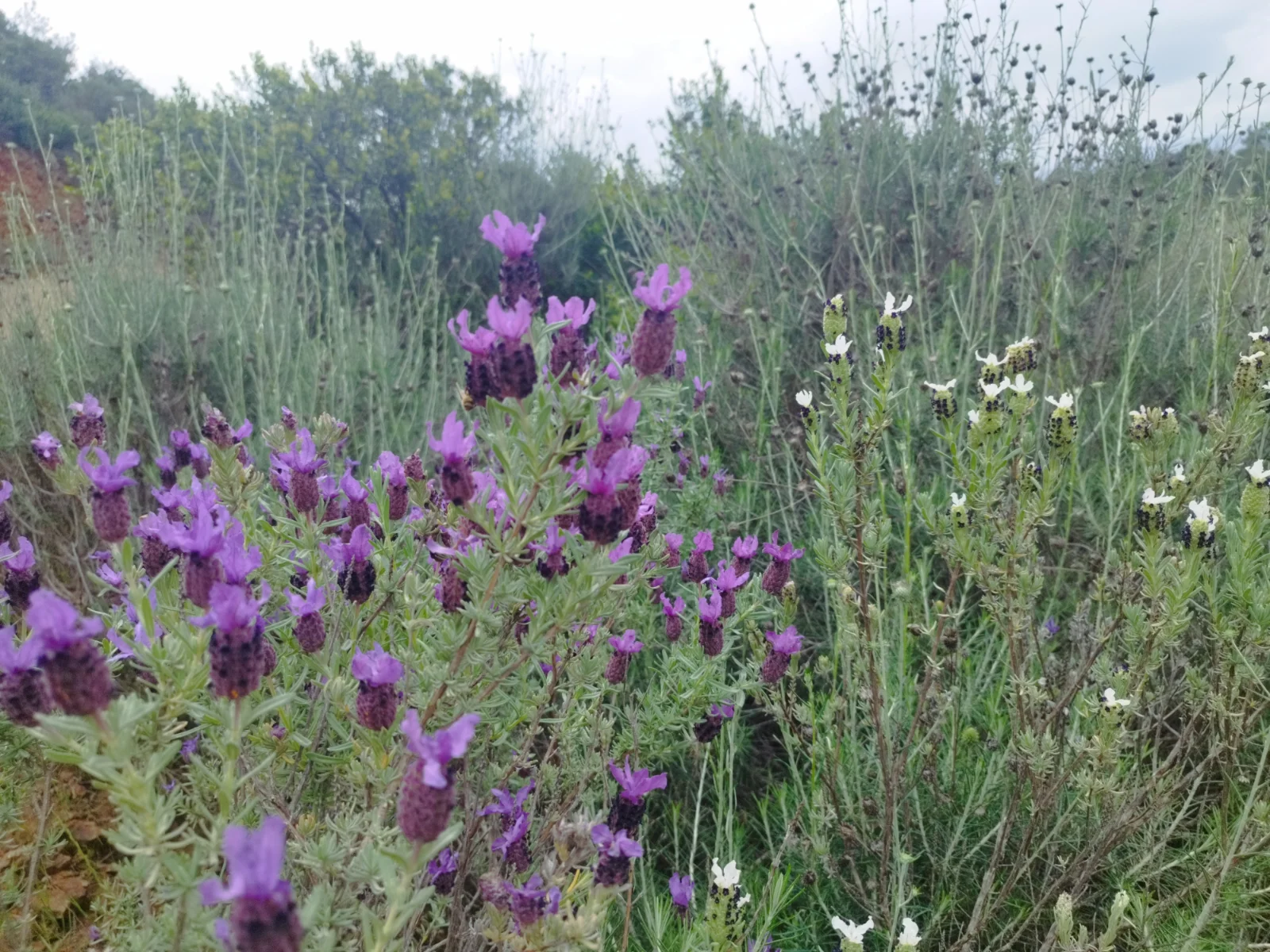
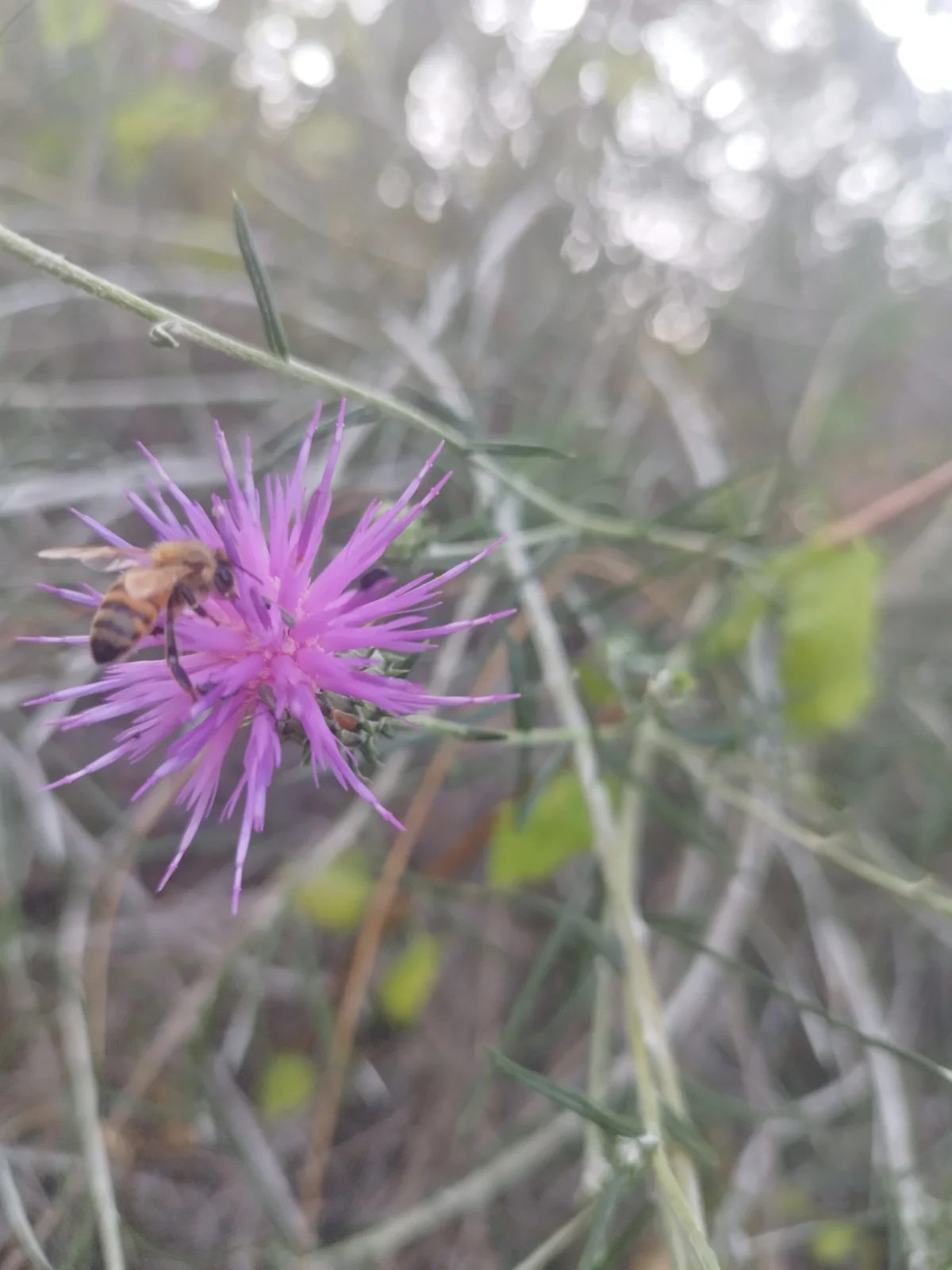
The hives went up to Stavrovouni in mid-March, on the flowering of wild lavender (Lavandula stoechas) and rockrose (Cistus creticus). Then came the flowering of wild rosemary (Ptilostemon chamaepeuce), myrtle (Myrtus communis) and thyme (Thymus sp.). The harvest took place on 7–10 August, extraction began on the 8th, and we bottle two weeks later, after the honey rests in the settling tanks. The harvest's name will come from the pollen analysis.
Laboratory results
Full lab PDFEach value beside its EU limit.
| Parameter | Result | EU limit | Status |
|---|---|---|---|
| Moisture | 15.9 % | EU limit ≤ 20 % | ✓ Within limit |
| Hydroxymethylfurfural | 11.4 mg/kg | EU limit ≤ 40 mg/kg | ✓ Within limit |
| Diastase activity | 16.9 Schade | EU limit ≥ 8 Schade | ✓ Within limit |
| Sugars (F + G) | 77.8 g/100g | EU limit ≥ 60 g/100g | ✓ Within limit |
| Sucrose | 1.6 g/100g | EU limit ≤ 5 g/100g | ✓ Within limit |
| Free acidity | 35 meq/kg | EU limit ≤ 50 meq/kg | ✓ Within limit |
|
Pollen analysis✓ Identified
Multifloral honey, in which no single flowering dominates. Wild rosemary (Ptilostemon chamaepeuce, 23%), wild mustard / charlock (Brassicaceae, 19%) and wild myrtle (Myrtus communis, 16%) stand out, with a notable presence of thyme (Thymus type, 8%) and the rose family (Rosaceae, 8% -- a family that includes, among others, hawthorn, wild rose and bramble). | |||
| Pesticide screen | Δεν ανιχνεύθηκαν | Target: not detectable | ✓ Clean |
| Antibiotic screen | Δεν ανιχνεύθηκαν | Banned in the EU | ✓ Clean |
EU pesticide MRLs apply (Reg. 396/2005); our own target is below the detection limit.
Analysis: Εργαστήριο Μελισσοκομίας – Σηροτροφίας ΑΠΘ · 7 Σεπτεμβρίου 2026
What does HMF 11.4 mean when the limit is 40? HMF rises with heating and with time. A low value shows honey that was never heated and comes from the 2026 harvest.
Permanent URL: planbeecy.com/b/2611 — this page never changes and never comes down.